Welcome, Sean. I’m so glad that you responded to my email and agreed to come on the podcast.
Yeah, great to be here.
Awesome. Um, how’s your day been? You cleared it for me?
Um. It’s cleared. It’s nice to be here. It’s nice change.
Fantastic. Yeah. We can. We can cut straight in. I guess I’m super interested in talking to you because you are the CEO of smart foods. Um, you know, as I mentioned in the in the intro, one of New Zealand’s. Um. Yeah, it’s a it’s a really well loved brand. Incredible food. We definitely have, uh, a range of, of, uh, both Tom and Luke and, um, you know, vocals in the pantry at all times.
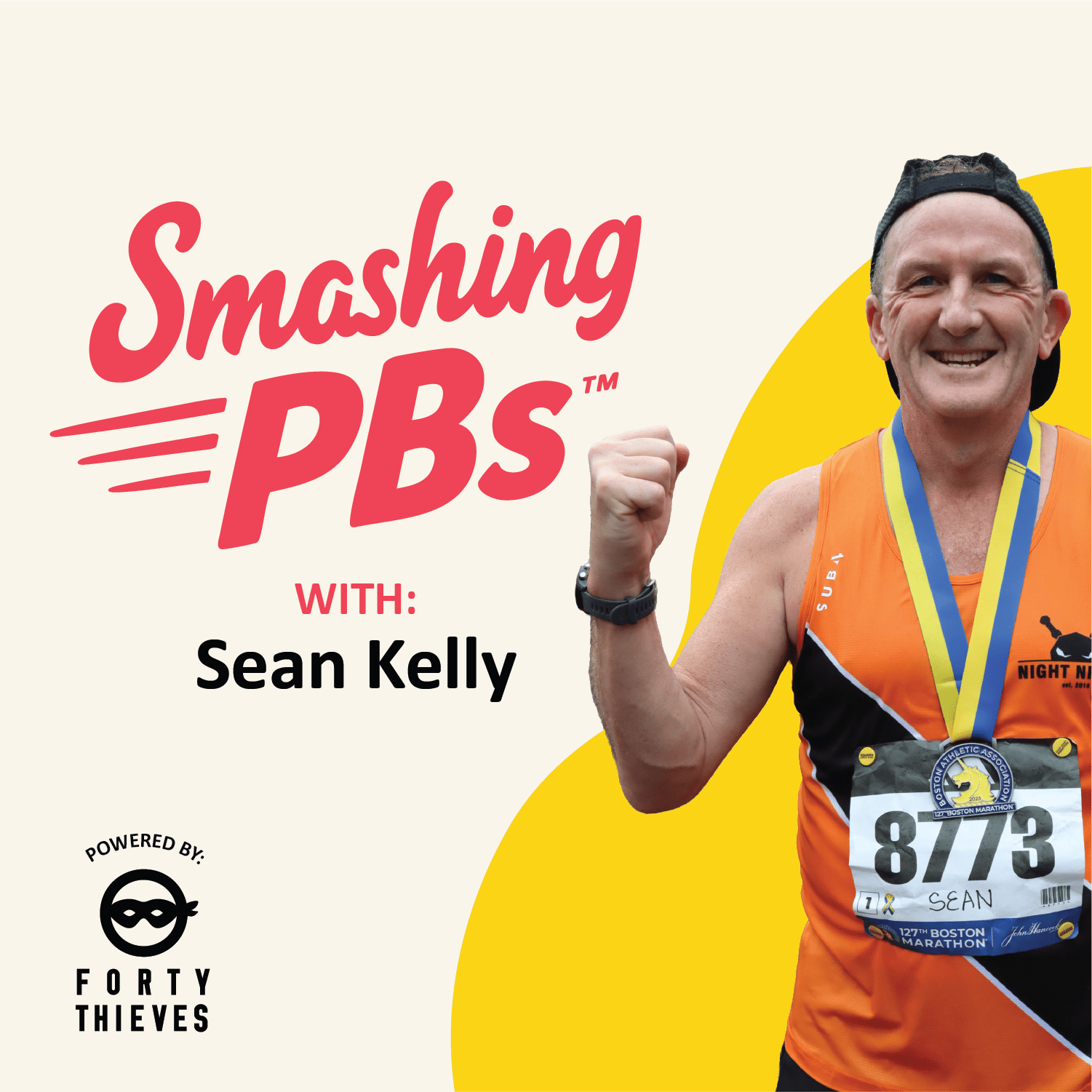
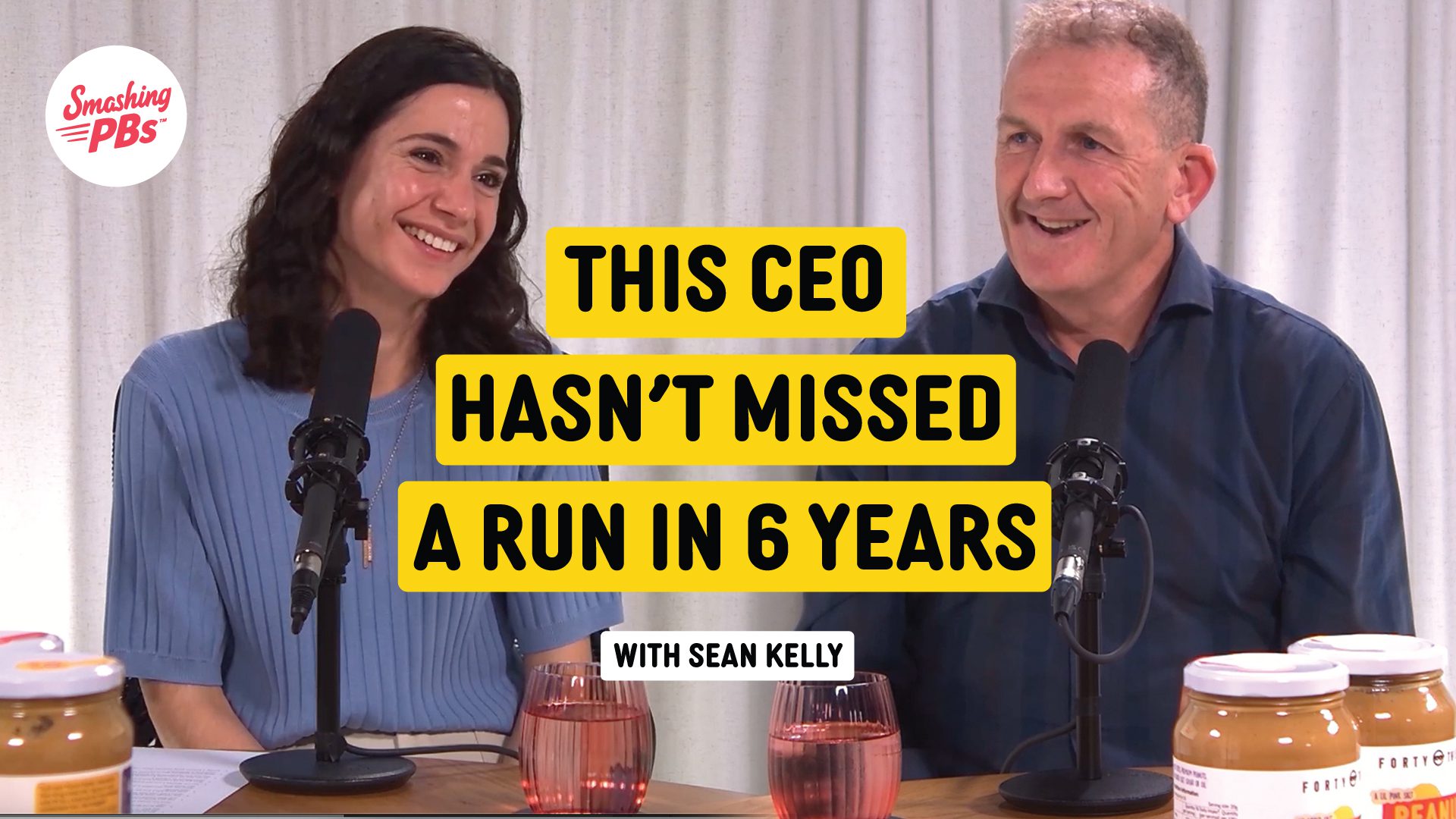
Um, at the same time, you are a very passionate runner. Um, and I think most interesting about that is that you do it every day. Um, so I guess I want to know, um, how how do you find the time to run every day?
Yeah. That’s, um, that’s I mean, I mean, it’s a great question, you know, how do you find the time? Um, people. I hear people often sort of say like, I, um, you know, I can’t fit it in. I don’t have enough time, and I have probably a little bit of a, um, you know, kind of a, I don’t know, I wouldn’t call it old school because I don’t I don’t know if it’s old school.
I don’t know what it is, but I just cut my answer as get up earlier.
Nice.
And, um, and and I say that, like, with some personal meaning because I used to hate getting up earlier.
You’re like me. I have this dream. I have this dream to get up at 5:00 and I.
Can’t do it. I do all my running well, predominantly. I do all my running in the morning now. I didn’t used to.
How are you doing that in winter? Like it is cold. It is dark out there right now.
Because it’s it’s um, it just becomes a habit after a while. So you know why I started running in the morning was, um, once I started running every day, after a couple of years, I got a bit more serious, and and I was running at night, and I was getting home really late, and my wife sort of took me aside and said, hey, look, it’s really great that you’re doing this, but it’d be really nice to see you.
Be nice to have some help around the house. And it was actually it was winter. I think it must have been about four years ago, 3 or 4 years ago. Winter. And, um, and I was like, okay. And I knew that it takes about three weeks to form a habit. So I was like, okay, I’m just going to get up and then I’m just going to force myself to get up in the morning and go for a run in winter, because if I can form the habit, then, then summer is going to be a piece of cake.
I’ve transitioned from hating running in the morning to actually I get a bit uptight if I haven’t had my morning run. Yeah, like I kind of need it. So it just becomes that. It just becomes that habit.
Yeah. I mean, that’s incredible. I, I find it incredible because I also had a similar it’s never to the extreme of the, of my guests. I’m going to understand this. I’m the micro level. But I also, um I normally run in the afternoons, but in summer I had the opposite problem. It was too hot. And so I figured I have to get up early.
Yeah, my early is probably not your early. It was like 6:00, which is probably normal time for most people.
But I mean. Five 3530 my alarm. 530 and look. To be honest, it doesn’t matter which day of the week.
That’s awesome for me. I said to myself, um, it doesn’t matter the distance and it doesn’t matter the pace, because the habit that I’m trying to form is the morning. Um, and I actually found by the end of summer it was incredible. I started just naturally getting up for those runs. And you’re exactly right.
Like, if you just, you put it in, if you just make the time and you form the habit, then suddenly it changes your perception and.
And and the thing about like getting up earlier, I say that because, you know, it is it’s it’s the break that excuse I can’t I can’t do it, I can’t do it. And then you go, yeah, but if you got up early you could. And so what does that mean. Well you have to go to bed earlier. And to be honest, that’s probably a healthier thing.
And I never used to do that. You know, if I went to bed before 10:00 at night, that would be that was just like, man, you.
Were jet lagged or something.
No, it was just like. But that was like, I just wouldn’t do that now. Like, if if I’m going to bed after ten, it’s like, obviously I’m getting a bit older, but it’s like, oh, you know, what the heck is going on? Like, um, and it’s just about that. It’s it’s kind of just about that habit of where you’ve got your body, your brain and that cadence of, I’m feeling good, and this is how I love it.
Yeah, I love that. Um, so I guess, yeah, it makes perfect sense. If you’re going to wake up early, you need a, you need to actually go to bed on time. Um, if you if you don’t, then you’re probably going to struggle to, to not hit snooze on the alarm. Um, what happens though, on a day where you’ve got, I don’t know, a like a social event, a dinner out, a 40th or 50th, some sort of something exciting that’s happening?
Do you still get up in the morning, or do you have to find a time somewhere else in the day?
Uh, look, in the six years in the in the six years that I’ve been running, every day there’s been, you know,
a heap, a heap of things. Yes. Right. But and like, I, you just sort of said, oh, you’ve got a meeting, you know? Hmm. My father’s funeral, you know. And it’s just like there’s these things. And I remember thinking, you know, it’s just. And I was like, of course it is. Of course I should go for a run. Of course.
How could. How could that ever be bad? How could that be the wrong thing? That is so good. And so, um. Yeah. You know, on those days. Yeah, it’d be one where you’d go, okay, how how early do I need to get up to do this? How am I going to do this so it doesn’t inconvenience anybody. Yeah. Now there’s plenty of runs and it will tend to be earlier.
But you know, if you’ve got flights and things like that, you just you schedule it on and you just go, we’re like, if I’m travelling away, especially if I’m travelling overseas, I will, I will sometimes I will save my run up until I get to the location because I’m like, hey, what a great way to be a tourist. I’m going to go for a run.
So, you know, it’s you just you make it, you make it fit. Yeah. And and honestly.
That’s your non-negotiable.
Yeah. Well, I’ve actually never had a day where I’ve, where I’ve actually where I would logically conclude, actually, I shouldn’t do it. Like, there’s not more pros to the cons.
Amazing. So what I heard from that was, um, like, I loved the example of why shouldn’t I go, like, what bad would come of it? What do you get from running?
I mean, all right, just it’s phenomenal. Like, you know, I had a long period of a long period of time where I was pretty physically inactive right in my life. And like from a career point of view, really driven and so forth. And, and and I wasn’t running and then I took up running, like took it a little bit as to why later on.
But I took up running every day and um, and then I just felt the benefits of it straight away. I don’t know if, you know, people talk about the release of the, um, endorphins and so forth, and, and I think that’s absolutely got a part to play as to why I love running in the morning, because I just get that positive, that really positive feeling.
Um, and it’s just, you know, again, it becomes all that kind of habit. But there’s just if my health was it went from I remember it was, you know, it was Covid, right? I hadn’t been to the doctor for ages. I went back to the doctor. The doctor did all their normal tests. They sort of said, look, your heart rate’s really low.
Is there something I need to know? And I looked at them and sort of said, yeah, I’m an athlete now. That’s cool. You know? And it was just like, you know, I was a bit tongue in cheek, but it was kind of true. Yeah. And, um, it was just like my blood cholesterol, blood pressure’s lower, my cholesterol. You know, his his fixed.
I’m, you know, uh, I’m, I think I’m currently, like, 17kg lighter than my my peak weight. Um, so there’s just so many benefits. But then the mental side of it, the confidence that comes with that, um, I don’t, you know, I don’t know if. I don’t know if I’d necessarily need to run every day to still feel that because there’s that sense of belief that that it creates.
Um, I don’t have any intention to find out if I need to, because, you know, because I don’t find, like, Tuesday was really terrible with it, right? Oh, horrible. And and I kind of had a little bit of laughter myself, because in my running community, the amount of people who did not run on Tuesday was phenomenal.
It was very impressive. I got up in that morning. It wasn’t do I go for a run? It was, what am I going to wear? Yeah, that was it.
Yeah. So it’s not there’s no bad weather. There’s only bad clothing choices.
Yeah, exactly.
I think you touched on something really interesting. I always focus on the mental resilience of running. For me, that’s something that has stood out. But there is obviously very clearly the physical, you know, the physical part of it as well. You know, you mentioned all the different health benefits that it has.
Was that like quite extraordinary to you to just see that happening. Like did it take was it weeks. Was it months. Like when did you sort of understand that you were physically stronger and physically healthier?
The physical side really comes down to, you know, it’s it’s just all those things. As to how far can I run without walking? Like when you start. So when I started running every day, you know, a run for me was three K. Yeah. You know, I remember when I ran five K for my first time, it was probably like my day five or something.
Wow. I was exhausted after that. I couldn’t run anything more than three days.
What was going through your head? What happened? How did you get from 3 to 5 days?
Because it was in this space. It was that physical stuff. It was the desire to see it. Okay. And so at that time, it wasn’t so much around pace, it was around distance. And five K doesn’t sound like very much, but it is when you start out, if you if you’re going from nothing to something that’s heaps and so you know, but over time what you find is that things just become easier like and the transformation is fairly quick from a physical point of view, I don’t know, 3 or 4 weeks.
You definitely have going to have noticed that you have ever run at a faster pace, or you’ve run at a longer distance without needing to walk, or a longer distance without feeling utterly like you’re about to die without without a question.
Talk to me about Strava. It was Strava a part of your running journey from day one or did you jump into it later?
It was. It was part of my running journey from day one, or the sort of the when I started at six years, I really liked Strava. Not everybody does. Yeah, I like it for two, two reasons. I like the personal record that it keeps. So it’s just it’s just easy. You just, you know, I’ve got this record of what I’ve done and I will use it from time to time, particularly if I’m in a training block now and I’m and it just it’s feeling really hard.
And then I’ll look back to it. That same part of that training block maybe two years ago for another marathon. And I will see that it was really hard. Yeah. And I’ll go. It’s okay that it feels really hard now because that’s what it normally feels like at this point in time. So I actually use it like that. But I’m what I call myself as a cheerleader.
Okay. Right. So, um, like, if you want to, like, for your run, you’ll probably get one from me.
Um, I think you do like all my runs, and I don’t do too many.
And and my wife actually drives her mad because I’m on my phone, like, before I go to bed type thing. Because I’ll be because I’ll be clicking through all my likes type of stuff, like I’m paying attention. If anyone writes anything, I’ll read it and stuff. I’ll tell you why. When I first started running on Strava, I was just like, what?
Probably most people are. I was really self-conscious. Yes. Like, I remember near my house there’s a hill, and I would sprint down it in the last sort of 500m because I wanted the speed to read faster than six minute KS. Yeah, because I didn’t want anyone to see that I had to run. That’s not the case. Now I actually, I will, I will run just as to how I feel.
And if and if I’m running over six minute KS, I don’t care. I actually view it now as I’m setting an example for other people not to worry about it, but at that time I was really, really conscious. But what happened is as you accumulated, people there would be like, I’m not going to say people’s names, but there was a guy who lives in my local neighbourhood and he’s a he’s a phenomenal athlete.
And we would run and then we started following each other on Strava and, you know, sort of nod in the street, started following Strava. And then I did this run. I can’t remember it was any like my run. And I thought, wow, That athlete.
How cool.
That guy just liked my run. I remember ringing my son and said, hey, check it out. I like my run. How cool is that? Right? It’s really.
Validating. It is validating.
And so, you know, I’m kind of like. Like if you do something. So I’ll like your run. But if you do something exceptional, I’ll probably comment. And because I don’t know, I don’t know if that’s going to have the same effect. But if it has that effect on 1 or 2 people, as far as I’m concerned, it’s worth my time.
Yeah, because it’s such a positive feeling, you know? And I mean, that’s the thing I love about the running community too, is we’re we’re all really supportive. And if you follow people on Strava, you invest in their journey. You know, you when someone hits that PB and they’ve been striving for it for months and they hit it.
When you know that journey that they’ve done it, it’s I mean it’s awesome, right? It’s as great as your own achievement. I that’s how I feel. I look at it, I’m like, I feel sorry for my wife because, you know, it’s just running story after running story. And then, you know, I might have been, you know, um, you know, one afternoon and I’d be talking about someone else’s run, about how amazing it was and how they’d done this and that.
And I was just. And I kind of laugh at myself going, that poor woman has to. She has to listen to my story. You know, she has to listen to me reliving someone else’s story.
That’s so good. But, you know, I like you mentioned about you mentioned about how you would run a little bit faster on the downhill so you could bring your average down. Yeah, I’ve done that. I’ve even gone as far as I’ve even gone as far as being like, I don’t know if I want to publish this run because it was too slow.
Yeah. And, you know, then you start to what actually ends up happening, I realised for me is then you don’t want to run because you’re like, I’m not feeling really fast today, so I don’t want to, you know, I don’t want to go because I’m going to be really slow. And it took quite a lot of it took a long time for me to realise that actually just getting out there and doing a run is more important than always worrying about your time.
Like you can worry about your time if you’re doing a race or if you’re doing like a a sprint session. But if you’re always trying to go your fastest, then it’s you. Take the love. You take the love out of the run.
Yeah, but like, I kind of like, look at it as this, you know, people like you do a half marathon, right? And someone sort of. They run 512th place, two hours. 18. Yeah. And afterwards they’re like, ah, it’s just sucks. You know, it was 530 people in the race. They only beat 18. And you know, my viewers, it was a public event.
You beat everybody else in the world.
It’s so good.
Right? That is so. And like, they all had the opportunity to be here. And I mean, the you know, people will say you’re beating everyone on the couch. Yeah. And you are and the thing. But it’s hard. I understand that because I just said it said I’m like, I’m really comfortable with who I am and where I’m at in life, right?
But I was self-conscious about it. It wasn’t until after a while that I kind of realised it was more actually about learning about running and going. No, actually, I’m kind of not supposed to be trying to run as fast as I can. All the time that it was just like, no, I’m I’m not going to let people see that. But when people start out, it’s kind of.
It’s pretty natural, but you kind of got to resist it. And then if you accumulate up, people will just. People will admire it. And really, most people actually don’t care how fast you run.
And they can’t remember either. No. And they also. Yeah. I mean, there’s so many things that affect you on the day. It doesn’t it doesn’t matter. Yeah, yeah. The fact that you what people remember is that you were there and the energy that you brought.
Exactly. You know, like, I mean, I know, I know how hard I know, you know, a lot of people in my running community, I know how hard they work. If you ask me what their PB was. Yeah, it’s it’s highly improbable that I’ve got to tell you.
Imagine your poor wife, as you say. Yeah. If you knew if you listed out everybody’s PB as well for every, every, every length as well. 05K 10-K. Yeah, yeah. I understand you’ve been running every day for six years. What did your sporting look like before that. Yeah. Um did you, did you play sports in school?
I was really I was really sporty at school. Okay. I mean, there were two subjects I was good at at school. Sport and math. Okay.
That’s what you do now?
Yeah. And that was that. That was kind of it. And. But then I left. You know, when I left school, I kept playing football. I kind of like, say, um, you know. Then I found beer and woman and everything kind of went pear shaped after that.
And this is a little bit like, uh, I guess Brent said, um, you know, uni was exciting. I like that you just went straight for it.
Yeah.
And, and.
And it kind of did while I stopped being physically active. I love food, so, you know, I, I, you know, I was clocking over 100, 100kg. Um, how I actually got him to run every day was, you know, you were sort of touching on family there. And how I got into one every day was I knew I was a walking heart attack waiting to happen.
So I was I was pretty successful in business, but I, um, you know, I was overweight, blood pressure, cholesterol, all this sort of thing. And, and I kind of actually thought it’s just a matter of time, really, that I will.
Were you scared of that thought, or had you sort of accepted it as your reality? As your your fate?
I kind of didn’t really know what to do about it. It’s just. It was just life. It’s what I was. And then. And then I fought. And then, you know, I’ve had various kind of moments where I’ve kind of learned to challenge my thinking, but. And I arrived at this sort of decision that basically, you know, I’ve got five kids and it was like, okay, what I’m going to do is every time my one of my kids asked me to do something that’s physically in my interest to do it, I’m going to do it, and I’m not going to say no.
So what I was visualising is I’m sitting on the couch with a beer in hand watching something. Yeah. And one of my kids comes up and says, dad, do you want to go kick a ball? And it was like, in that moment I’m going to say yes every single time I’d put the beard down, turn the TV off and go, go, boom. So I started doing that and it was basically, okay, I’m going to be physically active.
I’m going to be a good dad. All right. And then, um, my eldest boy, Seamus. He he I think he sort of twigged to this. And then he said to me one day he said, dad, do you want to go for a run? And I was like, no, I do not want to go for a run. I was like, yes, I want to go for a run, do it for a run.
Extraordinary.
And then a couple days later he said, do you want to go for another run? I did not want to go for a run. Yes, I want to go for a run. We went for a few runs and then he told me about, um, he had actually taken up running and, um, he said, dad, you know, I know these guys who do run every day. I think you should give it a go.
Wow. That’s how I got him to run every day.
So he. Yeah. You told yourself.
Promise. I’m just living my promise to myself. Which is. I just said okay. Yeah. And I’ve just kept running every day, and that’s not what I know. I love it. Or the marathon running in that. It’s because it’s somewhere in there. He basically, you know, he I like I don’t want to run a half marathon. Right. It’s just it’s too much because I was still pretty overweight when I first started.
And it was I was sore. Um, as I got healthier, all of those problems went away and he sort of said, you should run a half marathon. And I ran a half marathon. I ran out in a pretty decent time and I think it was pretty much straight out.
Do you want to share your time?
Uh, I think I was really over the moon. I think I ran like at that time. I ran like 130 for.
Your first half marathon.
I had run half marathons before.
Like when you were younger?
When? No, actually, when I was overweight, I was, like, trying not to beat, be beaten by the, um, the elderly lady wearing a pink tutu, running two hours, ten.
Sometimes very fast.
She kicked my ass. Yeah, I saw her. As I’m retiring. I can’t do it. I mean, and all I was doing was hoping not to have a heart attack in front of my kids, because I was still trying to show them that they had had it, but I didn’t. I was I was dying out there. No, I did actually run a half marathon. My one and only, the very first half marathon I ran when I was 15, I ran at 131 and I was like, wow, that was really good.
Um, I one day I’m just going to run a sub three hour marathon. You know, it’d be great. And that was a dream gone. It was lost to me. But then Seamus said, um, after the half marathon. She said, I think she’d run a marathon. And up until then I hadn’t even contemplated. It just seemed like a step too far. Um, but anyway, that led that led on to sort of marathon running.
Your your inner child was was kind of rooting for you and waiting for you to make some really cool.
Right to like. Um, you know, I was getting close to 50 at that time, and it was like, um, to go and say, I’m almost undoing 30 years worth of damage. Yeah. Um, you know, to go and say. And it was it was a childhood dream. I’d actually thought about it because I it was a lesson I took, you know, I had learnt the horrible way, having regrets in life, not doing things.
I never did it because I took it for granted that just one day I will just naturally do it. Yes. And you know, I was 15 and I was doing that. I would be a piece of cake one day. Um, and then I never did it. I never ran another half marathon, never ran a marathon. I ran my first marathon and, um, 2021. So it was only only four years ago.
Amazing. You’ve come so far in such a like, I want to say, in a short period of time, but I. I’m sort of a believer of fate, and I kind of feel like you were meant to go through years of, as you say, not moving that much to be able to get to this extreme. Like maybe if the whole time, maybe if you’d trained, you’d never be so passionate and so driven.
Um, no.
No, I think you’re right.
Yeah.
No, I think you’re right. There’s no question. There is, um,
passion. Passion is derived by the fact that I’m doing something that I
had probably thought that I couldn’t. Yeah, well, I would, I would, I would never do and and, you know, and I’m achieving things that I dreamed of as a young, as a young person. I’m now achieving as someone who’s, you know, past my physical prime, shall we say. And it’s just like, that’s how cool is that? Like, I’m an, you know, I, I like my achievements, I don’t I only because, you know, I believe that we should pursue being the best, best versions of us.
Yeah, right. And I love that.
So personal. Best.
Yeah. And so. So when I’m, when I’m achieving these things, it’s like, yeah, I’m. I’m a bit of me. Yeah. How. How cool is that?
Yeah.
And and that should be a constant. And whatever you’re doing, there should be a constant thing that you’re looking to do. And when you can have these constant little moments of where you go. Yeah, I’ve just done that. Um, it’s pretty neat.
Obviously, you were saying you were quite successful in business for many years before you started your, you know, your running streak. Um, what? Yeah. Can you talk me through a little bit about that? Like how you, when you finished school, what you studied, how you got into your current career?
Um, yeah. I mean, you know, go right back to the beginning, you know? Um, because I was an accountant. How did I become an accountant? Um, this is a true story. Okay. A primary school? Yes. Okay. Homework assignment. Come to school the next day. Say what you want to be when you grow up. You know that classic thing.
I mean, I had a really humble upbringing. My mum retired at a factory she worked in for 34 years as a factory hand. Uh, my dad retired from the fertiliser works, um, as an engineer’s mate. Um, you know, it was real simple. Real simple upbringing. They didn’t have two pennies to rub together, but we never went without.
And I went home and I sort of said. And so I knew that having money would be a really good idea. So I went home and I said to my mum, what? People earn a lot of money. She said, doctors, lawyers and accountants. And I knew I didn’t want to be a doctor because they’d dealt with people that were bleeding and dying, and I thought that seemed awful, right.
So I was like, I don’t know, what do lawyers do? You don’t want to be one of those. Nobody likes them. Oh, I did.
About ten years later, I figured out what I was. And I thought, okay, my mum sit there. What do accountants do? They count. Okay, I can count because I knew I was I can’t maths at that session, so I, I literally went school and everybody else wants to be a fireman and a nurse and whatever. And I stood up and said, I want to be an accountant.
And the teacher said, why aren’t you in a lot of money? And, and so and then I, you know, if I’m giving the short version, I sort of say I haven’t had a better idea since, but, um, but as I sort of carried on through life, I learnt that it was a transferable skill. Yes. And so what I also wanted to do was I wanted to do the thing that I was passionate about.
But like most people, I didn’t know what that was. I hadn’t found that thing that I was passionate about. And so I figured, well, a transferable skill as a good holding place until you find the thing you’re passionate about. Um, and so I got into, uh, I kind of found my way into FMcG, and then, um, I ended up the breakthrough moment really for me was Hubbard Foods.
And. And then I realised that I actually really love making stuff that is validated by people because they buy it. Yes. No. And and and a lot of people buy it. And millions of dollars is demonstrated in that you’re doing this right. And that’s kind of how I view it.
Exciting for for the person passionate about counting. Yeah.
Yeah. And so anyway, so I was CFO there and then I became the CEO of that, which I realised was really kind of what I wanted. I actually didn’t love being an accountant. I was a pretty good accountant. And probably what made me a good accountant. I wasn’t a normal accountant. I had I did have some really good teachers, quite visionary.
Um, I understood the connectivity between numbers and people, and what I mean by that is really good accountants of people who can actually help other business leaders, their peers, make the right decisions because they’re maybe not as financially astute. And, you know, another really good lesson, you know, that that that I can’t remember where I learned it, but it was like, imagine what you could achieve in life if you didn’t worry about who got the credit.
Now, I think that’s a really good thing for accountants to understand. And the reason is, is that accountants by themselves generally are not seen as as friendly or, you know, great people. Right. I’m being very stereotypical, but an accountant next to a sales and marketing manager, an accountant next to an ops manager, with both of them agreeing and nodding.
That’s very powerful.
Yes.
Right. And so the key was to to actually empower other people. And so that’s how I kind of built, built my career as an accountant. And then that obviously led to being a CEO.
What was what was that transition like? Did you do you feel like you were already sort of you had taken on some of the CEO role as CFO? Were you already doing parts of it or how did that transition happen?
Um, yeah. Um, without it, without a question. I was really lucky. The CEO at the time. He obviously foresaw a transition that I didn’t foresee. He sent me to Wharton. Um, and um, in the US. And I got to do a sort of a, um, a, you know, about three weeks, three weeks up there doing an executive program. And I got to be honest.
I mean, I was already feeling quite confident, but when I came back from that, if you had said to me, build a rocket ship and go to go to the moon, I would have backed myself to figuring out how to do it. If I came back from that really feeling quite empowered, quite confident. And so and, and I was and I was just, I couldn’t, I couldn’t wait.
I didn’t realise then, you know, the, the CEO had had, he’d obviously planned this all out at the penny dropped because about two months after he announced his resignation, he basically took me into a room and sort of said, look, I’m going to recommend that they they put you into into the role. That’s how it played out.
So.
Um, what happened in the US? What was it that gave you so much confidence that had set you up?
Uh, I learned I learned a lot. Like, I mean, I’ll give you. I mean, I’ll give you.
Two of the Americans? Like, are they a different league ahead of us? No. Or was it actually doing?
There was like about 45 people on it. And they were I think there were about 30 different nations represented. So the two greatest lessons that I learned. One was, um, the United Nations did a whole lot of research right around, um, what are the greatest barriers between, um, two different cultures working together?
And there’s two, two massive barriers. And the first one is really obvious. It’s language. You don’t speak the same language, right? You can’t communicate. And the second, which stood way above everything else, which surprised me, was cadence. It was pace. So when we use terms like, oh, we’re in island time, you know, that could be meant as like a derogatory term, like we’re going to stop or if you’re in the islands, it’s like it’s a compliment that at one point I’m thinking it’s a real thing.
And so what I learned there, and I learned this real time because I was working with different cultures. So Australians, guys from Brazil. Um, me, as a Kiwi, we had around about the same cadence that I remember. There was a really funny moment, you know, know, we do this, sort of this, um, this kind of role play computer thing.
We had to load up and we had to push the button to load up what all of our decisions. And we competing against all the other teams. And there’s a clock on the wall and it’s just gone through and we’ve got one minute. We’ve got literally one minute and we’ve got to push that button. We haven’t pushed the button because we’re like, guys, are we?
Are we all aligned? We’re all aligned. And a guy from the Middle East just sort of said, hey guys, can we just take five minutes to discuss this? And the Brazilian, the Aussie and and and may we just burst into hysterics. Push the button. Because, you know, that was his cadence and there’s nothing there’s there’s no right or wrong to cadence, but it’s different.
So what I learned about that is that even within cultures, people’s pace is often a tension point. So my job as CEO is to get them all to kind of overlap or to respect each other, to understand each other. And that was a really important lesson to me, because then I realised that that was a tension point with how teams work together.
And, you know, you’ll say someone’s never on time. Um, they’re always late. Um, um, they’re always asking me for something that. I’m not ready yet. Right. You know, it’s that those things. And so when you understand that, and then you start to get those to gel together.
That’s, um. That’s a really powerful lesson. I hadn’t thought about it before. Um, cadence, that and also, I guess it’s at different times of the day. So some people might be, like you say, early risers. Um, and and sharper in the morning. Yeah. There might be firing out there emails there on top of what they need to do.
But by the end of the day you can’t you know, you can’t get a straight answer out of them. And then others I know as well, um, from my experience before 40 Thieves, I worked as a user interface designer and worked with a lot of developers and those guys, they were happy to put in the hours in the middle of the night for you, but you couldn’t get them before 10 a.m., you know.
And that was and the CEO at the time of this company, he accepted that like they almost had like a different start time. And it was just sort of accepted company wide because he knew that they didn’t they didn’t clock off when it was when the time when it was 5:00. They clocked off when they’d finished doing what they were doing, and not because they particularly cared about pleasing the CEO, but they just once they were in the zone, you know, their cadence had had picked up.
And when you were then when you were aware of that and you can get those things to actually, you know, it might just be respect each other. It’s literally just telling, talking to people and saying, this is actually how you’re going to do it. And this is the crossover period or whatever it might be. That’s when you start to get things to go.
The second thing I learnt was about risk taking. So going from a CFO to a CEO,
CFO is sort of traditionally they’ve kind of paid to be risk adverse. Right. You’re really like you’re the one who’s basically watching and saying, hey, this is where we’re going to put a profile that we’re not comfortable with, and it tends to be dollar type orientated, whereas an CEO is about growth and about ambition, and where are you going to go?
So they have a kind of a different perspective in terms of risk. They obviously have to function with each other because you don’t want to make bad decisions. But um, I had this really cool moment. So in this um, in this role modelling role playing that we were doing. So those 45 people were split up into six different teams, and we were competing each other over multiple days, um, around really complex, complex business stuff.
And in fact, actually, Wharton was phenomenal. I mean, literally, you would go to the pub at night and they would send an anthropologist with you to watch your interactions with other people. I mean, if I come from New Zealand, it’s that whole different level for me. And it was just like, wow, never literally just they’d come back and they’d give you feedback in terms of, um, um, you know, how that might have impacted your life kind of thing, you know?
And so I learned I learnt lots of stuff. And there was unbelievably well-resourced. But this in this model, um, my team was in second place, and we came to the last day of rotating rotation. We had to make the, the decisions and I was the CFO. So I did a lot for that team. And I did a lot of the thinking in there in terms of how is this going to play out in the model and scenario modelling and things like that.
And we got to give a, um, on that, that last decision making data. What are we going to do for our last build. And the team that was winning, they had just dominated right from the start. They’d been really, really, really strong. And um, but I’d kind of looked at what they had done. And the night before, I couldn’t really sleep too much because I was just going, logically, they’re going, this was their next move.
This is how they would protect their position. So when we got together as a team, I kind of said to my team and I said, look, if this was the real world, I would say we’re our shareholders are going to be absolutely stoked with our performance. We should take an honourable second place. Yeah. Um, and have very, very happy shareholders.
And, um, and we should do this. But this isn’t real world. I want to see what happens when you’re really brave. Yeah, right. And when you really just go for it. And, um, and they were like, what do you want to do? And I kind of told them what I wanted to do. And basically what I’d worked out is to with this, what looked like a relatively impenetrable environment where they would likely be weak and we could actually attack that unexpectedly because, you know, we’ll call it their fortress.
They didn’t need to defend their fortress. They’d rather keep those, keep those resources and put them over here. So I was like, okay, you go over there, but I’m going to take this from you.
So then the next day comes around and, you know, it’s very American fashion. It’s sort of a big presentation type thing. They’re going to announce the winner. It’s a slightly embarrassing moment for someone because they got to the last two teams. It was us in the other team and they and they basically went to hand the mic to the other team and said, hey, we’d like to know, how did you do that?
And the CFO for that team grabs the mic and he starts talking about how and the presenter sort of said, hey, stop, we’ve got a hey, hey, just, just hold up for a second. The winner is actually Team Orange. Oh my team. And and.
His face.
Had this personally really empowering moment. Yeah. Because I was sitting at this end of the queue and we were we’re at the end of the line and we’re at the long line. And, um, he handed the mic to the person at the other end who was on my team, and he said, I want to know, how did you guys do this? How did you do it?
What did you do? And hey, um, handed the mic to, to that person and he just goes, I’m going to pass this mic to someone who can explain it. And the whole team, just one by one. They just passed the mic down to me. And it was just personally enormously empowering. So that’s why I say I came back really confident because I was a little old Sean from New Zealand, you know, what was I doing?
I mean, I mean, the, the, um, the global marketing executive for Microsoft was there, you know, it was just like, what the what am I saying? Yeah. And um, and I told them and then the, um, the presenter basically said, you did what we call in the US. You did, um, you swung for the fence. That’s what we call it.
Okay. And I had swung for. And so ever since then I’ve basically most things that I do with my team. It’s like the guys who were not swinging for the fence. Put the bed down. Okay. All right. You ever swing for the fence? We put the bat down. Save your resources. Yeah. And so if I do NPD, you know, new product development.
It’s like, hey, if you don’t see a home run, don’t bother.
Don’t bother with it. Make sure you. And I just. I’ve got so many questions around this topic but just quickly on the NPD before I forget it. Do you like to make sure you’re swinging for the fence? Do you do a lot of testing? Do you make sure a lot of people have? Have you done a lot of research? So a lot of insights or is it depends.
It depends what we’re doing. It’s there’s mixed views on that. If I go back to when I was at Hubbard’s. Um, Dick Hubbard would never pay for research. Okay. Because he kind of had a Henry Ford type of approach. Right? You know, if I asked them what they’d wondered, they would have said more horses or faster horses or whatever it was.
And, um, and a lot of times I’ve done research, you know, I’d say is probably right. I don’t I don’t think, I don’t I don’t know if it is. You become instinctive. I mean, I’ve, you know, I’ve been in the usually game. So I’ve been in the muesli muesli, granola again. Um, for 20 years. Right. So it becomes instinctive and but there’s also these big macro trends around the world in terms of like what’s going to work.
So there’s already data points that sort of say, this is actually this is likely, but how do you how do you deliver it in a non compromised in food. You know the non compromise. The biggest non compromise is does it taste good. Yes. I mean it’s a really overlooked. Like people go oh nutritionally it’s fantastic.
Well if it tastes like cardboard no one’s going to eat it. So there’s no point. Right. So um yeah I think but NPD swinging for the fence like really important. Yeah.
Yeah, yeah. Knowing that. Yeah. Well knowing that something’s going to stick, like it’s actually going to work.
How I changed things was, um, the global success rate for NPD is 4%.
Okay.
Right. Which is very, very.
Low that, uh, that does.
21 and 25 products last 12.
Months. That honestly, that’s kind of like in some ways empowering because we have a lot of we also push out a lot of NPD. And sometimes you really love the products and you think you’ve figured out what’s going to work, but it doesn’t. Yeah.
And so and and Brent talked about it before you fail fast.
Yeah.
Like so when you see it’s not going to work, you should go.
You got it. You got.
To cut.
It off early.
Just get on with it.
Right. Not just keep pushing money into it.
But but once you realise that that’s actually the success rate and and and, you know, you know, the investment cost of inputs can be quite staggering. So you just you’ve got it. And all I did with my team is I basically said, guys, we’re just gonna have some really honest conversations up front. If we don’t like something, if we don’t feel right about it.
Because I know that over the years I’ve looked at a product that someone else has been really keen on, and I’ve kind of hoped it would be successful, but I’ve not felt that it would be, or others where I felt that it was going to fail for those reasons, but I kept my mouth shut. I don’t want that from anyone. Anyone who’s got the doubt to call it, let’s discuss it.
And then and we just put it through a much tougher filter. Now you would say research. Well, I kind of was researching, but I was researching with within a close group of people who, you know, had some inside knowledge as to how things might play out. So that’s actually proven to be pretty, pretty successful.
Yeah. Yeah. Yeah. So you follow your gut and you actually, I really like that about the honest conversations because you’re right there. Sometimes you have this little feeling about something, but you don’t want it to be there, so you just push it away. But if you just if you’re honest with yourself and you let your team be honest with you about what they think works and doesn’t, then you could save yourself.
You know, a lot of money down the track.
Absolutely.
Fantastic. I want to go back to you and the Q and how the microphone got passed down to you. Yeah. What did you say? Do you remember?
I just kind of I literally it was pretty. It was pretty tactical, if you want to put it that way. I just told them what we did. Yeah. I basically said, look, this is a scenario that I could see that, that it was probable that that, um, that, you know, competition was going to do this. And so
rather than laying up and holding on to reserves and sort of defending, um, a patch, even though it was like the last cycle we were all going to tell our shareholders are the happiest. Um, we basically attacked attacked these two areas and, and here’s how we attacked it. Yeah. And here’s why we attacked it.
Yeah. And, um. Yeah. And there wasn’t anything. There wasn’t anything. Um, really, it wasn’t anything really profound about it. I mean, the learnings I got from that was, was I think the origins of it was, um, some strategy stuff that I participated in early on in my career when I was at DB breweries, and they had some really smart strategists from Heineken came over and they kind of dissected the whole country up into like kind of geographical, sociodemographic.
And it was like our fortress, their fortress battleground. And the the concept was, I don’t think anyone wanted to be saying this as like 20 something years later. Um, was that you minimised your resource resources to defend your fortress, But you created an impression that you were stronger than necessarily what you were investing.
Okay. You participated in guerrilla warfare in a competitor’s fortress. I see, and to be annoying so that they would over invest to defend that fortress. And then you put all your, all your real resources you put into the battleground and you won the battlegrounds. Right. And so it was, it was that it was that mentality which basically said, these guys are likely to leave their fortresses.
If you want to put up these fortresses undefended or not adequately defended.
So you’re almost, um, you almost go into your, into the competitor’s, um, space. You make them feel like, you know, you’re playing the same game so that they get busy doing it. But then in the meanwhile, at the behind the scenes, you’re creating something much bigger and much bigger.
Yeah. Yeah. And and it kind of it’s sort of, I mean, you know, in real life, I mean, it depends. I mean, in real life, I don’t mind competition. I kind of like competition. I mean, competition causes you to be better. Yeah. So, you know, there’s some some competitors you might not like. And there’s obviously you tend to respect.
I’d say I probably respect 99% of competition I’ve ever come up against. Um, because, you know, they cause you to have to think. And I think that’s really positive. I think that’s actually, you know, um, why would you want to destroy if you want to say, why would you want to destroy something that’s actually causing you to be better?
So I tend to not kind of look at competition so much as I must beat them. Yes. It’s, um. How do I hold my relevance? Yes. And and and and it’s probably a relevance of. I’m larger then. But. But how do I hold my relevance to what their offer is? Yeah.
Yeah. So much, so much. Um. Amazing stuff. I want to take notes and go see what we can, uh, how we can use this for 40 themes. Um, I, I also wanted to ask about, um, about you mentioned that the second thing that you learned that, um, in the UK, in the US. Sorry. Was that to take risks. But then you also kind of mentioned that you before launching a product.
Like unless you were. Yeah. How? What I want to know about a risk that you took. Yeah. Um, that didn’t work.
Ah.
Because I feel like you’re quite calculated. And, you know, as you say, you, um. What was the saying? Go for the fence. Hit the fence. Yeah. Um, I feel like many times you’re quite calculating. You have actually made it work. Which are their risks that have actually shaped either your career or something else.
Um, that didn’t go, well.
Work.
This is a tough one. Right? And, and and I’ll tell you. I’ll tell you why. Fundamentally, it’s a tough one for me is because I believe you win or you learn.
Okay?
Right. I don’t believe in failure. Now, obviously, I use the word failure. Yes, because I acknowledge it. Yeah. Because if you if you don’t fail, you’re not trying hard enough. You have to fail, right? You learn your greatest lessons in failure. Mhm. Okay. Those, Those who are truly successful in life have probably failed 99 times before that one time that they were successful, but they learned from it.
And so when you sort of ask that, it’s hard for me to look back because my brain instinctively goes, oh, I learnt a great lesson there, you know. And so I don’t I can tell you where I have failed. It’s where I’ve not followed my own rules, where I’ve launched products and I’ve and I’ve hoped and afterward. And I wanted to look smart.
And I told my team this was great, but I had a doubt. Yes. And I convinced I convinced my team that I was right. Yes. And I probably overlooked them, and I didn’t yet.
So I was.
There.
And.
I didn’t allow them the opportunity to tell me that it was probably wrong. I see and and I started to believe what I was saying. Okay. Right. And then I looked back. I looked back and I said, you always knew that was. Yeah. There was.
Deep down, there was this little.
Feeling. You just wanted it to be because you wanted to be the first person who’s done it. I see I’m not going to go into the detail.
No, no, you don’t need to I feel like no, but I feel like everyone can imagine.
You want to be the person who. Who did that? Yes. And it was. It was ego. And it was ego that stopped me following my rules. And when I went back and said, man, it would have been a lot better off just to follow those basic rules of as this as this. Um, I mean, I still have it. There’s still the CFO read me a little bit.
So I do worry that I’m a little bit still a bit risk averse. And so that’s why sometimes I push things a little bit. But when I look back, it’s that. But yeah, I mean, I don’t know, I don’t. Um, yeah, I don’t see, I don’t I for anyone who talked to me and anyone who worked for me, that’d be so confused because I’d say, you know, um, um,
00:44:41.420 — 00:44:54.780 · Speaker 2
you know, it’s really great that you’re working with me because I’ve got such a high success rate. We never fail. And then. And then I’ll be saying, guys, you know, and then we’ll have a failure. And I say, guys, it’s so great to fail. This is where we’re going to learn the most. And I’d be like, wait a minute, dude, you just said you’d never fail.
Yes. And I guess, like you, if you think about it, you don’t fail. Because if every failure is learning, then. So.
Yeah, but I just think people were in a very literal sense to be like, this guy’s just full of it, right? Like, it’s fairly all over the place.
But CEOs though, they’re always a little bit delusional. You know, that’s what I’m sure like the general public are like they didn’t that didn’t make sense in my brain. But you know what you’re talking about.
Yeah. I mean, I mean, I mean, absolutely. I mean, I, I find it, um. Yeah, I find it, um, fascinating being the CEO because Kiwis, we’re very humble people. Right? So you kind of want to talk to you, but you need to talk a good game because people want to follow someone who knows what they’re talking about, who is confident.
Absolutely. So it actually goes against the grain, I think, for a lot of Kiwis, because that’s not our nature. We’re not taught to be like that. You’re right. So I kind of call it you got to get a little bit of American. And you’re right, because that’s because, you know, if you if you interview Americans, they’re going to have no problem telling you how wonderful they are.
Again, great. Nothing wrong with that. But for Kiwis, it’s just not.
That tall poppy syndrome that we sort of grow up with. Where? Yeah. You know, if anyone sticks out too much, chop chop them back down to to the general public. But you’re so right that I think, yeah, we’ve sort of all grown up with it, so we’re quite humble. But at the end of the day, I think there is a change. I’m sensing a change, even in New Zealand that especially with like LinkedIn, the world, you know, people like, yeah, maybe that’s what it is.
And we’re sort of learning we’re leaning into American values perhaps. And yeah.
And and to be honest, there’s, there can be a comfort in being brash as to because to us it’s like we have to expend so much energy and working out how to be polite, but message across. And when you don’t, don’t feel that you have to do that anymore. It’s like, well, that just got easier. I’ll just tell you, I’m great.
And here’s why.
That’s so true. You manage obviously, we’ve talked about smart foods. We talked about, um, about Hubbards before that. Um, there’s Tom and Luke as well. So these are all very healthy food businesses that are creating food, you know, to power you in the morning or get you through. I know Tom and Luke, I have those chocolate bliss balls daily.
Um, as a little 3 p.m. kind of pick me up. How do you feel? I’m combining your worlds now. How do you feel that now since you have started running? Um, how does it. Does it change the way you look at a business like, or an industry that you’ve been in? For so long.
I remember one day saying to to to discover. I remember saying, look, I know I shouldn’t. We were having I think we were having to restructure. You know, people go and I said, look, I know I should try to, um, you know, this isn’t personal. And he goes to just absolutely wrong way to think. It’s got to be personal.
Yes. If you make it personal, you’ll care more. You’ll work harder to get the right decision. And it was through that. Then I realised, really, you know, our jobs are what we do. For some people, it’s what we do so that we can earn money so we can do the things that we enjoy. But they’re interrelated. If you’re lucky enough and you do a job that you love, it’s definitely interrelated, right?
So there’s absolutely a crossover. Um, it’s made me more aware of
the nutritional needs of people. Yes. but at the same time, I’m really careful to not try and go and say, well, just because my nutritional needs have changed and I’ve become maybe more health aware and I eat better and I understand the nutritional composition of food better, it doesn’t mean that everybody’s on that same pathway.
Right. And I think that’s to me that’s the, the the secret about about food. It’s the hard thing. Right. We have all these sort of standards and say this is good and this is bad. Really. What’s good and bad is the balance over, over a day.
Absolutely.
Like, you could eat a piece of chocolate cake at, you know, midday end of the day. And probably no one would be better. And that if you ate it for breakfast, I’d say that’s a terrible start to the day. And that’s fair enough. Right. But but really, it’s what did you eat over a whole day kind of thing or over a couple of days?
That’s probably what’s really it’s kind of it’s going to count. So it’s made me more aware. I mean, it certainly helped me. I mean, the running and the weight loss really helped me because I was as the sales, I was doing the sales role at Hubbards. And then I went and then Covid happened and I remember I walked into a category manager’s office and we’d launched the low carb products, the keto products, and I couldn’t believe how they took off.
So I went on it like a method actor and that and the running. And then, you know, I lost 20. So I walked into a category manager’s office. What the hell are you doing? I said, oh, I’m doing this. Maybe it’s all this.
That’s so good. I think they took it, too. They did. They did so good. It was.
Uh, it was it was a ratings success. And, um, but, you know, so. So yeah, there was definitely, you know.
I aided you and some of your.
Yeah.
But I don’t think, I don’t think people who are like CEOs or, you know, like, like yourself who you you can’t you can’t really separate the two. No. Um, you would never want one to be a burden over the other, but they’re kind of they’ve got a, they’ve, they’ve got a like my brain doesn’t switch off from a work point of view.
It doesn’t, but it doesn’t. I don’t allow it to distract me from what I’m doing. It’s just that, like, I will go to a caf and I will order something off the menu, because I believe that’s some of the ingredients that are used in there are really fascinating, and I would like to experience them to see how I might use them.
It wasn’t the thing that I actually necessarily felt like eating that day, but my my professional brain is just going, yeah, but there’s there’s an experience to be had here that I can learn from. So, you know, it’s just it’s like that. It didn’t stop me from sitting down at the caf and with my family, but I just made a slightly different decision.
Yeah, that’s so interesting. So, yeah, even you’re kind of NPD and you’re looking for NPD even in your in your personal time. Yeah. Yeah.
Well, because the inspiration.
Will come from.
Anywhere.
Yeah. And it’s so true. I mean yeah I recently went to the UK for a week. It was very exciting. And I went obviously to, you know, trying to enter the market there with 40 thieves. But at the same time, I let my eye opened up my eyes as to what was available there. Um, and it’s fascinating to see stuff that is starting to take off here, but it’s massive over there, you know.
And so I can see how. Yeah. You do. You always have to have your eyes open and to see what the trends are. And even if it’s even if it’s from a cool, trendy cafe, they might have spotted it or they’re onto something and you can bring it into into what you do. Yeah. Um, obviously FMcG is it’s a, it’s a slower game, you know.
Yeah. You’ve got a lot of.
A lot of moving parts, a lot of moving parts before you can.
Launch something like.
Different machines, different.
Packaging.
Yeah.
What’s your favourite part of managing an FMcG business like brand?
I don’t I don’t really want to sound corny because. Because people will go, you know, rubbish. That’s not it. As a CEO, I see myself as a conductor of an orchestra. Yeah, right. And if I’m threatening my staff, that’ll sound like I’m the conductor of the orchestra. I can play any instrument here. But it would be a bad day if I picked one up.
It’s a nice way of saying do your job. But the. But in reality, what that means is each of those key players in my team and their teams. I want them to be able to be the best that they can be. Yes, and I want to bring that harmony together so that we are the best that we can be. Yes. And when when we hit that home run and I look across the room and I see we’ve hit, we launched a skew and it’s gone to $1.5 million in its first year, which is like phenomenal in breakfast or something like that.
And I see the ops manager who’s not a salesperson, or I see that innovation person who’s not sold, but he, he, he built that product.
Collaboratively built that.
Product. And I see these beaming smiles.
Yeah.
And I just got to have a beautiful moment.
You know, it’s just. That’s so.
Cool. You know, and I just I love that.
I just love.
It. I, you know, I just love those moments.
Of celebrating success.
And and just but but seeing people just take it because, you know, going to going to work every day can. For a lot of people, it’s just not. It’s not fun, right? Like it’s kind of it’s a chore. But when you see people that just got this moment of real satisfaction, I’ve worked hard for it. And here’s the thing.
The other moments I really, I really love. I mean, I love launching product and seeing them being really, really successful because it’s like because there’s a validation there, right? It’s like, wow, I’m in the 4%.
Yeah. You know. Yeah, yeah.
No you’re right. Um, having I guess you put so much into it and every, every individual puts their little bit into it. And then, yeah, I really like that orchestra analogy. Once it all comes together. It’s a it’s a beautiful harmony. Yeah. Um, yeah. I think I need to write a book with Sean Kelly isms.
Like all these little, like, notes.
Um, okay. Well, I want to go back to running again. Yeah. Um, two things. One. Yeah. Can you describe a moment, um, where you have in your running journey that you’re most proud of, like that you can imagine if you were to close your eyes and then following that. What, what how do you come down from that high?
So you’ve hit your personal best.
Moment I’m most proud of. I actually get a little bit emotional when.
I think that you’re.
Allowed to get emotional.
In here. Yeah, I get that.
Um, so I went to Boston Marathon. Boston Marathon was really tough. Um, it was going to be my first sub three attempt. Um, and it was really tough because my dad had died in October and we knew he was going to die, and, um, and he’d suffered for months. And I’d been on that journey with him, and he had said to me,
oh, I get worked up.
I’m sorry. I’m. Yeah.
I’m sorry. You’re fine. No, no, I don’t mind. No, I don’t mind. I mean.
These are real feelings. Um, and he said to me, I won’t be there. Oh, I remember picking my dad. I burst into.
Tears. Yeah.
And I was like.
I’m like, I just want to tell him I don’t.
Do.
This, you know? Yeah. And I was like, oh my God, this is so embarrassing.
People don’t look.
Me. It’s a little weird. I picked this up,
but it made it and it was just like, it made me see this, you know?
And, um, but he, he he unknowingly, he had loaded me up with all this emotion and. And I blame her
because, you know, the most important night sleep before a marathon. There’s two nights out and I slept for two hours, I couldn’t sleep, I just all I could think about was my dad. And I was like, it’s okay, all right. Hey, you didn’t get that out the night before. I’ll sleep. I got two hours of sleep. So for for those two days before I slept for four hours, I got on the start line.
And, you know, like, when you’re really tired, you physically hurt. I was literally going to run the most important marathon in my life. And I was in agony. I was like, physically sore. I ran in a really, really disciplined way. I, you know, the normal GPS type thing. The marathon was running longer. I didn’t kind of spot it.
It was real amateur hour type stuff. Um, and I ran it in three hours, 53, I think 53 seconds, three hours. So 53 seconds over three hours.
That’s incredible.
Amazing. People after me was like, oh, you must be so good. I didn’t even think about it. You know, when I crossed that finish line, I just thought, God damn it, I’d be proud. That’s all I thought. Yeah. Um, anyway, I knew I could run that substrate. So I got in touch with my coach and I said, listen, um, I want to run well into marathon.
I don’t know if it’s like eight, ten weeks or something. I went around running to marathon, and this is my proudest moment because I came from that. I recognised that I could do more. I ran the Wellington Marathon. Now the beauty of Wellington Marathon was it was two laps out and the one lap was the half marathon.
My son was running in the half marathon. Yes. And and because they started 1.5 hours apart. So it kind of meant that by the time I had gone and done my second loop, as I was heading up, my son would probably run past me and I would see him. So that was like going to be quite cool. And I was definitely going for a sub three hour attempt here.
So I’m running. I’m running it. My son comes past. He’s he’s like doing like a he’s, he’s hitting sort of about a 115 half marathon pace. And he’s certainly.
A.
Speedy. Yeah. And he’s go past and we sort of exchange pleasantries and stuff. He goes out. He’s got the turn point. I’m running out by now. I’ve sort of split off. I’m actually moving pretty quick. And as he’s coming down, he said. Chicks like we see each other across the course. And he goes, you’re good.
And I’m like, thumbs up. I’m. I’m all good. I can do the turn. I stuck him back and as I’m coming back, I see him running towards me. I’m like, what the hell is going on? Yeah. And he he comes to me and he says, um, I wasn’t really feeling it today. I just thought I might pay you for your sub three, and it’s like nine K to go.
Yeah. And I and my brain was like, oh my God, I’m going to run sub three today. Yeah. I’m not failing.
No, no my son’s dropped out of his marathon. He’s gonna join me for mine.
Yeah. And it was just.
You know, that’s the kind of son of one.
That is just. That is so incredible. I mean, I.
Ran sub three, I ran straight, but, you know.
They deserve an applause.
But that’s that’s not how I think of that. I don’t think it’s so. It’s so cool. Right. I rent my first sub three. Yeah. And I don’t think of when I think of that run. I don’t think of my first thought. I have to remind myself. I don’t know identify you. You’ve been chasing this for your life, right? You ran it. I don’t think that.
I think about my son. Yeah. And I and I remember, you know, running back with him, and I just remember this. Oh, my God, I’m going to. It wasn’t even a question. It was like, there’s no way I’m failing with him beside me. Yeah. Um, so hands down, is there? I mean, there’s so many of them running. There’s so many moments that, you know, you can be proud.
You asked about PBS. I think PBS. Yeah, it’s tough for I. I ran a PBS a few weeks ago. I hadn’t run a TV in two years.
And so you can you can just you can pull one out unexpectedly.
Um, and just, just conditions was sort of perfect. And it was like, it was. That was really neat. Um, and but,
um, yeah, I, I don’t know, because I just kind of figured that one day what will happen is I look back and I say that that run that I did three years ago, that was my PBS. Yes. Because I’m kind of pursuing been the best that I can be. um. I am mindful of them. Yeah, and I am. And I am trying to run faster. Okay. Right.
So. And I’ve. But I’m also, you know, father time is against me. And so it’s just like, hey, at some point, it’s just it’s just not going to happen. But I’m trying to run the fastest I can run, but I’m quite keen to head off into it. So the ultra just is. Ah, I’m not really sure that’s a time thing. It’s more a.
Distance and experience.
Crazy person. Just, you know, ran a hundred miles and um, depending on the course and all of this, I’m not sure time really matters.
Exactly.
Um, so I think, you know, once I sort of do a bit more of that, I’ll probably look back and I’ll just go, okay, I run my fastest, I run my fastest times. But but I think people should pursue it. But I think it’s also what is what is your personal what is your personal best? Because there’s other things that are going on in life, right?
Yes. It could just be that you’re out doing it. It could just be that, you know, you ran more KS this week then what you did the, the, you know, same time last year or something like that. I mean, um, there’s so many amazing people who their achievements aren’t time based. It’s not. It’s not how fast they ran.
Yeah. You know, lots of personal stories. True. You know, I’m going through hardship type stuff, and I keep running. You know, I mean, I know people who are suffering from cancer, and they just keep running every day, and you just go, oh, that’s pretty cool.
That’s a pretty. You’ve definitely smashed a PB every day.
And again, you asked me how fast. I have no idea. I just know that they ran.
Exactly. Yeah. Oh I mean, I feel like that. Like that. That’s it. Like, I, I I’m happy with everything you’ve said. Um, there’s. Yeah, maybe, maybe one last thing. If you were to give advice for somebody who was like you. Yeah. You know, I mean, I absolutely loved what you said, that you just said yes to whatever your kids wanted from you.
Yeah. Um, yeah. A very good dad. And in many ways, very good kids, because they they got it out of you. But what would you say to somebody who is listening? And they’ve been thinking about it, but it just doesn’t feel like they’re too scared. You know, they’ve never done it before. It’s not how they envision themselves.
It’s not part of their current understanding of themselves. How do they get started? What do they need to do?
If it’s if someone’s feeling like they want to do something that it’s I mean start.
They’ve already they’ve already thought about it. That’s part of it, isn’t it?
And I tell you the secret to run every day. And someone else actually told me this. And it’s why I did it. Because, you know, you talk about consistency and things like that. The thing I love about run every day, and it doesn’t have to be a big run, right? Like, it doesn’t have to be a big run. It doesn’t have to be a fast run.
But the thing I love about run every day is you can’t hide from it. You either did it or you didn’t do it. So if you talk about like we talk, you know, I talked about that weather on Tuesday. If I ran four days a week, I wouldn’t have run on Tuesday. No, that would have been.
That would have been one.
Would have skipped that one. Yes. But then what’s to stop you skipping the next one and maybe the next one? Yes. And then suddenly I’m not I’m not doing it. so and so. I think, you know, forming habits takes about three weeks. So I think if you were to if you wanted to do something and you did it every day and, and we’re not crazy, like, you know, like a gym instructor say, please do not go and do your legs day every day.
Right? I’m not meaning that, you know, just like but if you did something every day
and you’re and you’re. And don’t overdo it, like, set yourself up for success. I’m actually going to do small bits now so that I can celebrate the fact that I’m doing more later. Don’t try and rush to get to there. There’s no there’s no rush on on turning your life into something cool. Right? It’s a building thing.
And so I just say just start. So if you said it was the word start, don’t stop. Yeah.
That’s it. Start and don’t stop. Yeah. Fantastic. Yeah. That’s what we’re going to finish on that okay. Amazing. That was so good. Yeah. Thank you so much. Um, I feel super enlightened and I feel like I wasn’t going to run today, but I think now I have to. I ran yesterday so my head I don’t have to run every day, but no.
Speaking to you, I think I probably need to, uh, maybe up my own.
Very well.
And you’re running my mileage.
I do. I like all your runs.
No. Thank you. Um, no. Thank you so much. You’ve brought so much, um, incredible insight both to how you run a high performance team and large teams at that, how you’ve brought so many incredible products out into the world that people are enjoying every day. And then how you manage your your personal wellness.
Um, yeah. Yourself. It’s fantastic. Thank you.
So much. Yeah.